The Life of Heracles
The Twelve Labors of the Strongest Hero
Born the son of a god, Heracles was hunted all his life by Hera's hatred and by one terrible sin. This is the story of the twelve labors laid on him in atonement — and of the man behind the monster-slaying.
Introduction
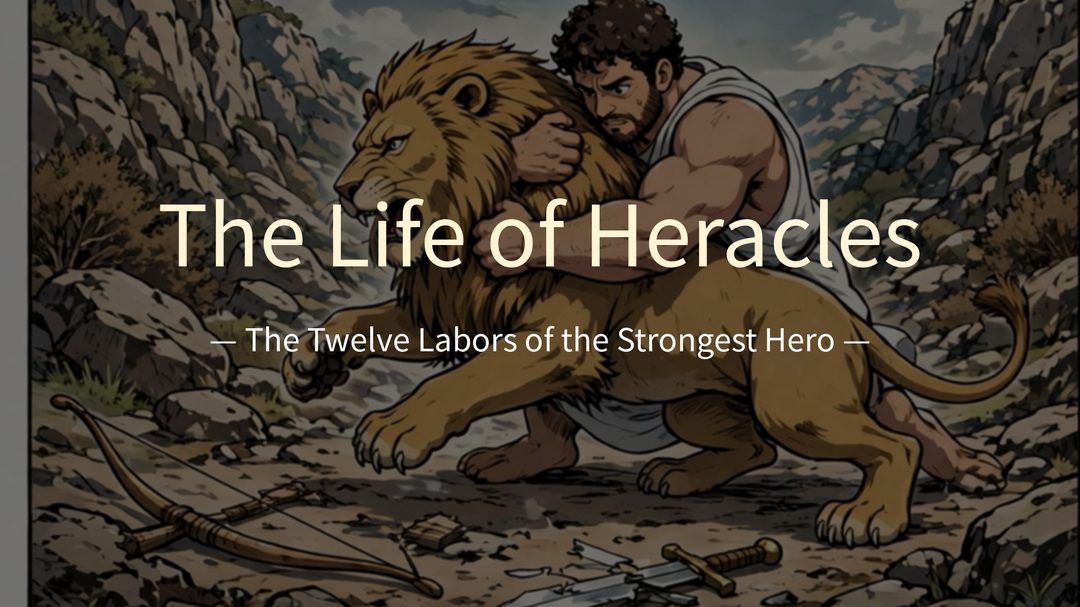
Who is the most famous hero in all of Greek myth? His name is Heracles. Born the son of a god, he spent his whole life hunted by suffering, and by guilt. Today, the life of Heracles: the story of the twelve labors laid on the strongest of heroes.
His Birth, and Hera's Hatred
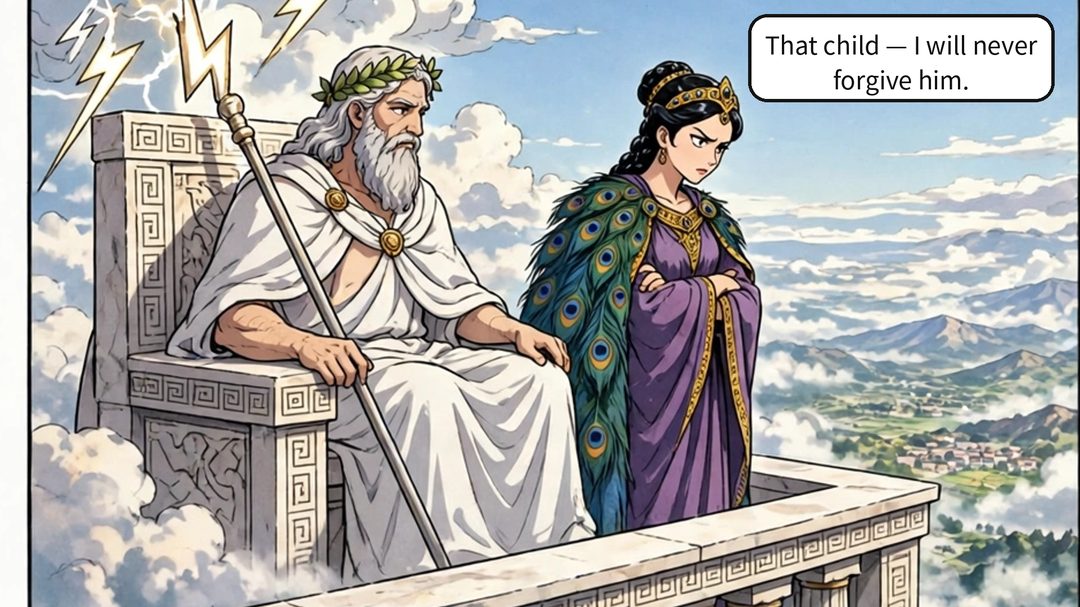
Heracles was born to Zeus, king of the gods, and a mortal woman named Alcmena. Hera, the wife of Zeus, hated this child. He was her husband's betrayal, given living form.
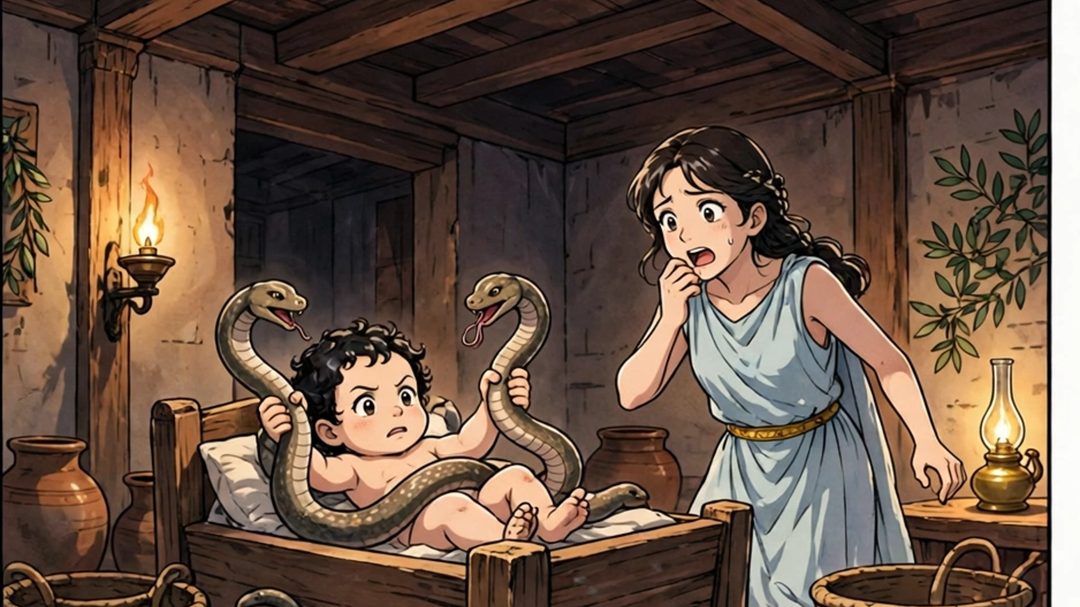
One night, Hera sent two great serpents into the cradle of the infant Heracles. But the baby seized a serpent in each hand and strangled them both. His strength was there from birth. From that night on, the life of Heracles would unfold under the shadow of Hera's hatred.
The Madness
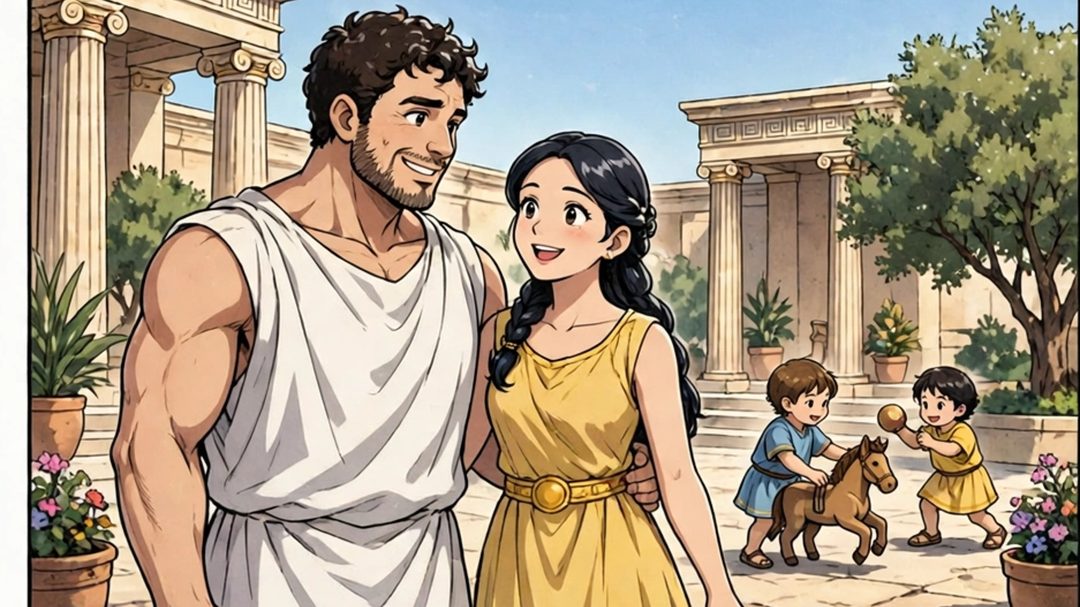
Grown to manhood, Heracles married Megara, a princess of Thebes, and children were born to them. It was a quiet life, for a man who had never lost a fight.
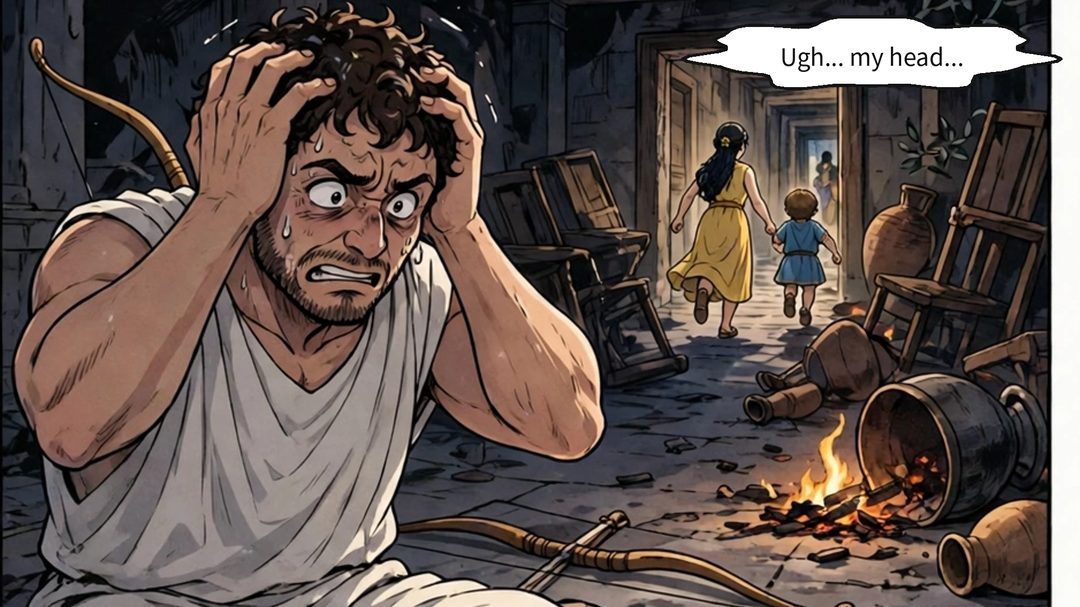
Then Hera's hand reached him. She sent a madness on Heracles that stole his reason away. Out of his mind, Heracles mistook his own children for enemies. When his senses returned, he understood: by his own hand, his children were dead.
The Oracle
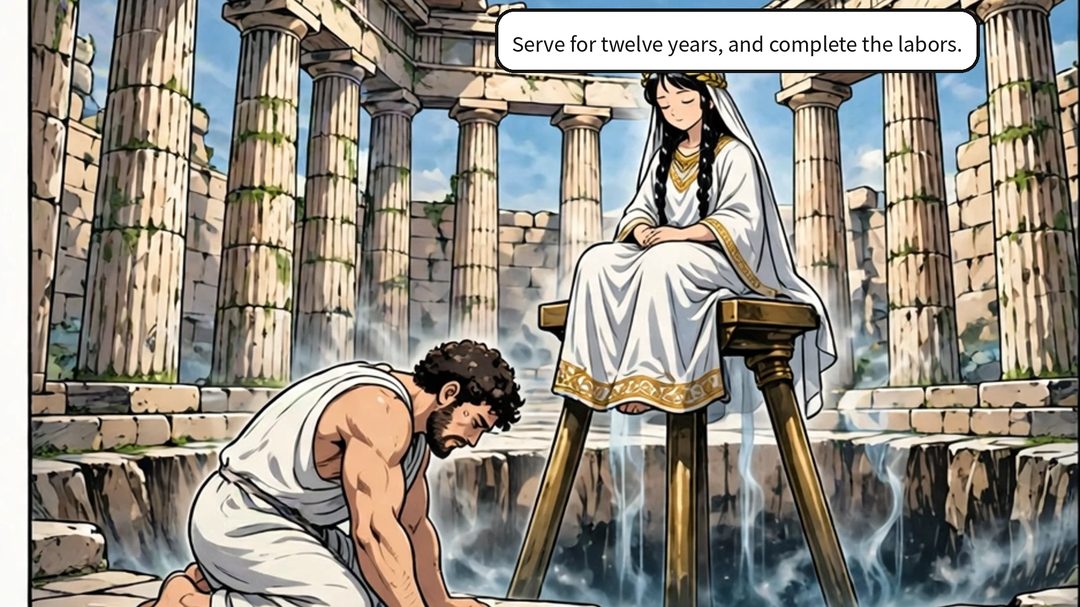
At the bottom of his grief, Heracles turned to the oracle at Delphi. The priestess answered: Serve Eurystheus, king of Mycenae, for twelve years, and complete every labor he commands. Do this, she said, and your sin will be cleansed. And after death, you will be granted immortality. And so began the harshest service of atonement in all of legend.
The Service Begins
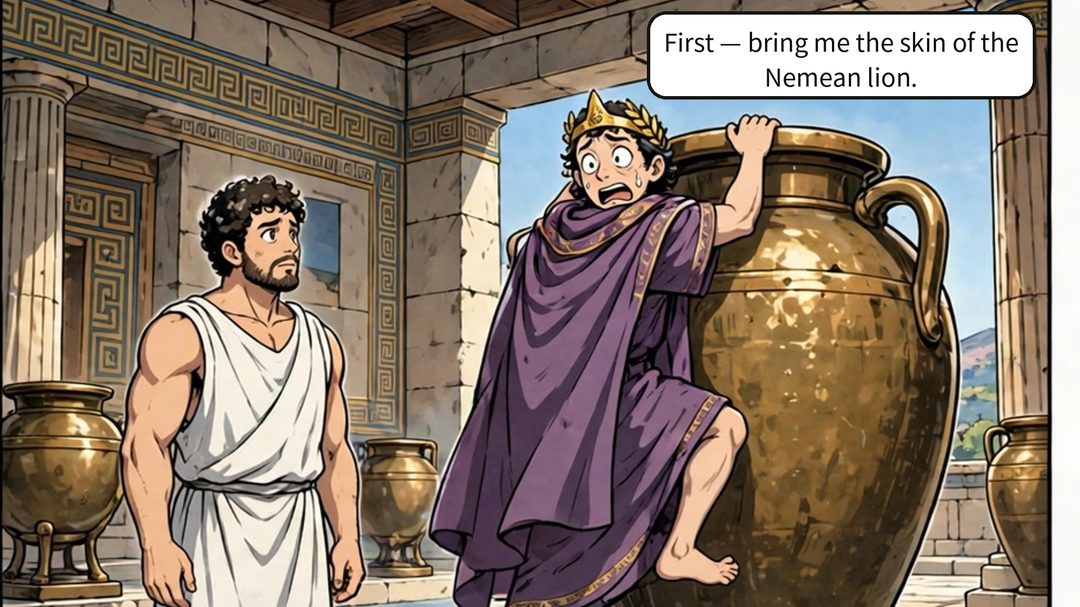
King Eurystheus feared the strength of Heracles. So he handed down, one after another, tasks that no man could hope to finish.
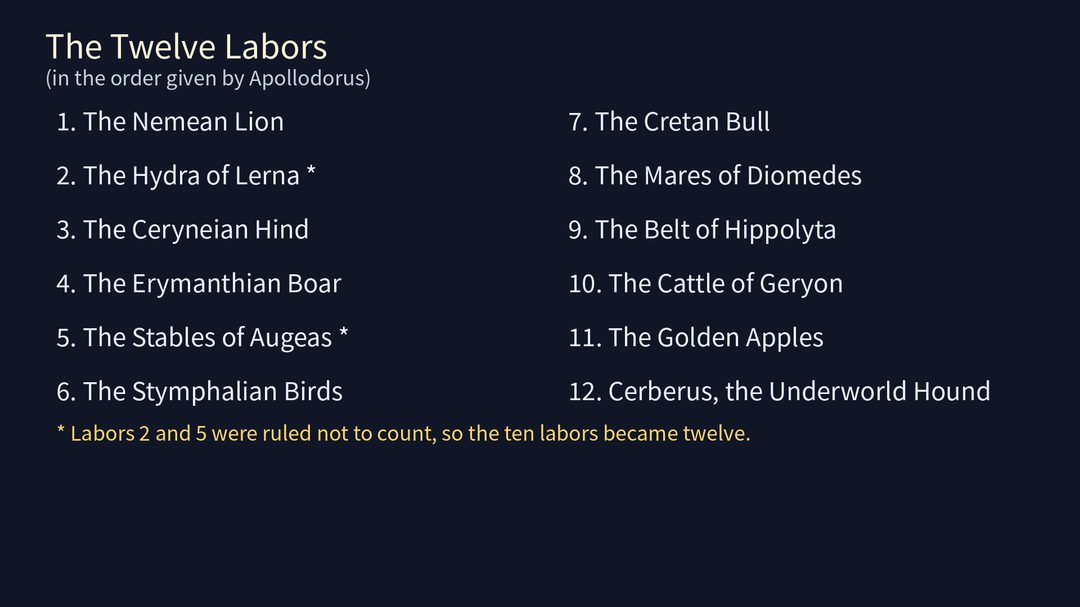
The labors numbered twelve, from slaying monsters to bringing up the hound of the underworld alive. Every one of them was beyond human power. They began as ten. But two were ruled not to count, and so ten became twelve. You will soon see why.
The Nemean Lion
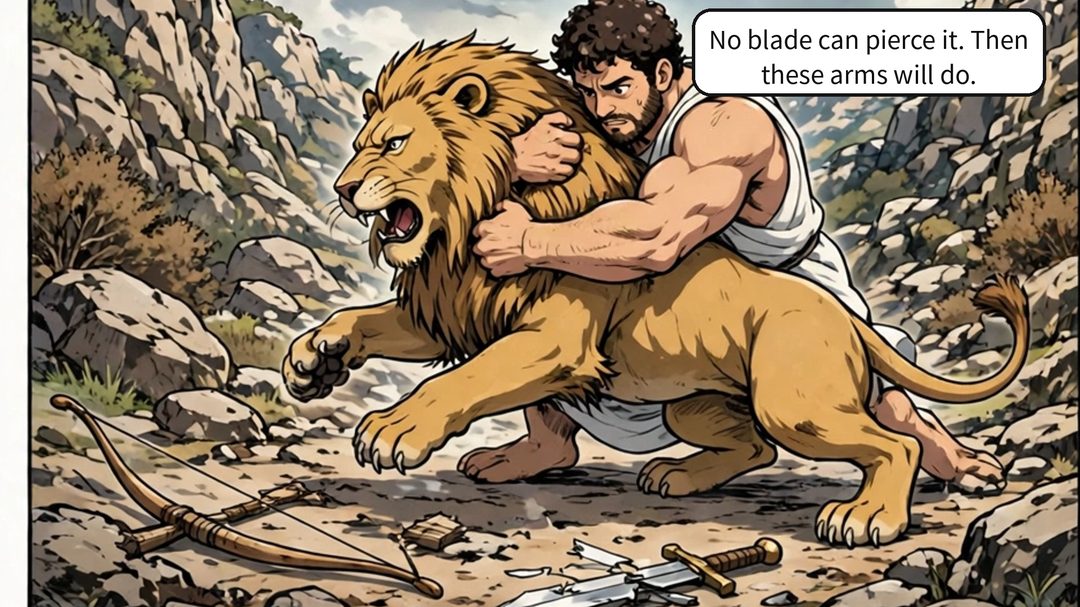
The first labor was to slay the giant lion that haunted the valley of Nemea. No arrow and no sword could pierce this lion's hide. Every weapon raised against it had shattered.
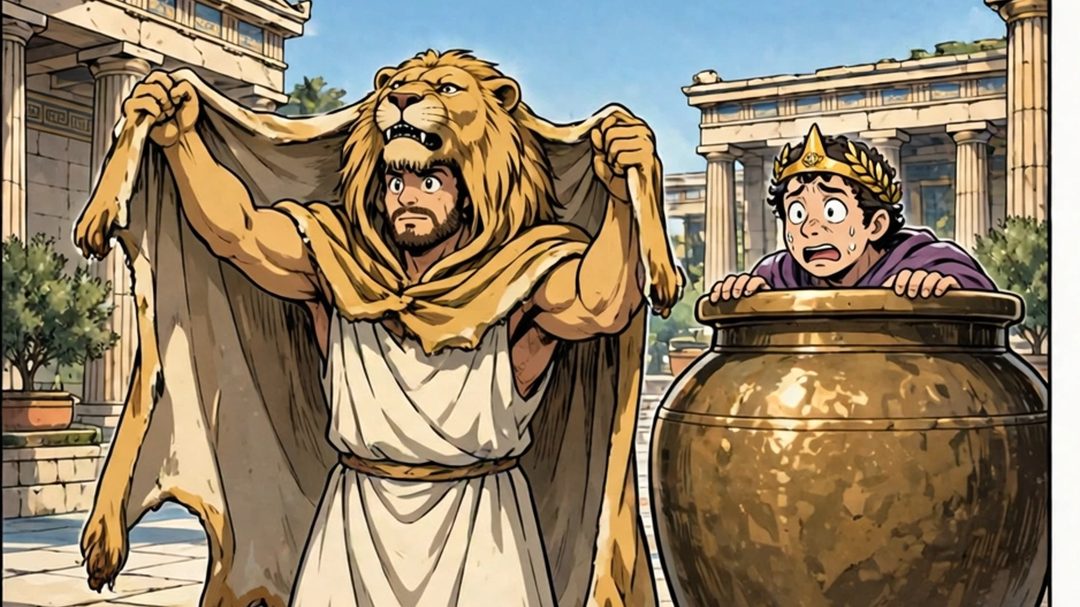
So Heracles grappled with it bare-handed, and choked the life out of it. He skinned the lion with its own claws, the only things sharp enough to cut that hide. From then on, the lion's skin became the mark of Heracles.
The Hydra of Lerna
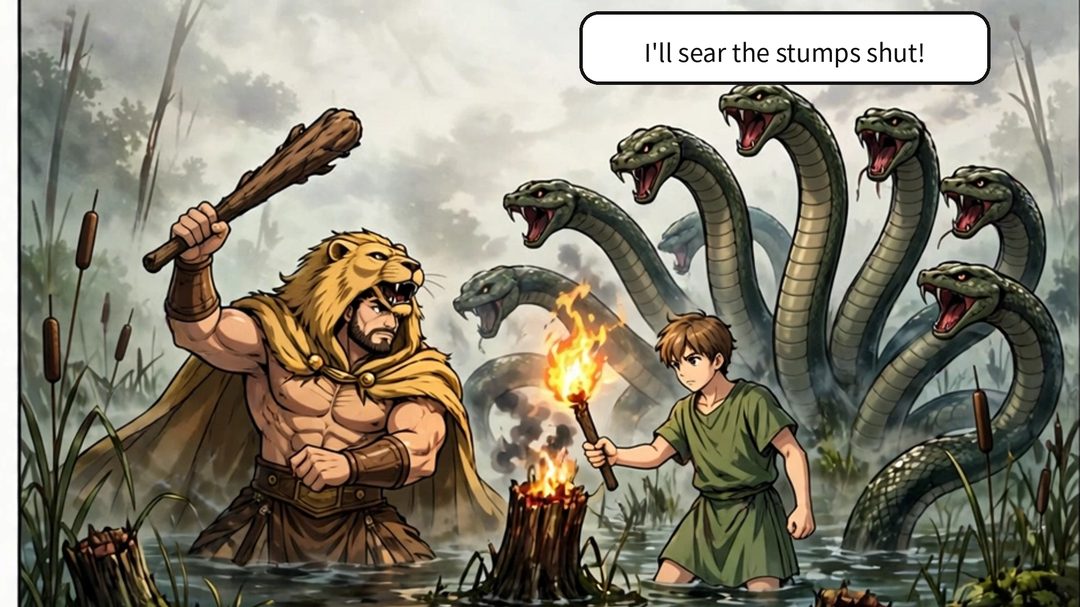
The second labor was the Hydra, the great serpent of the marshes of Lerna. The Hydra had nine heads. And when one was cut off, two more grew from the wound. His nephew Iolaus seared each stump with a burning torch, and then the heads could grow no more. The Hydra fell. But because Heracles had taken help, this labor was ruled not to count. Still, Heracles dipped his arrows in the Hydra's poison, and that poison would one day lead to tragedy.
The Stables of Augeas
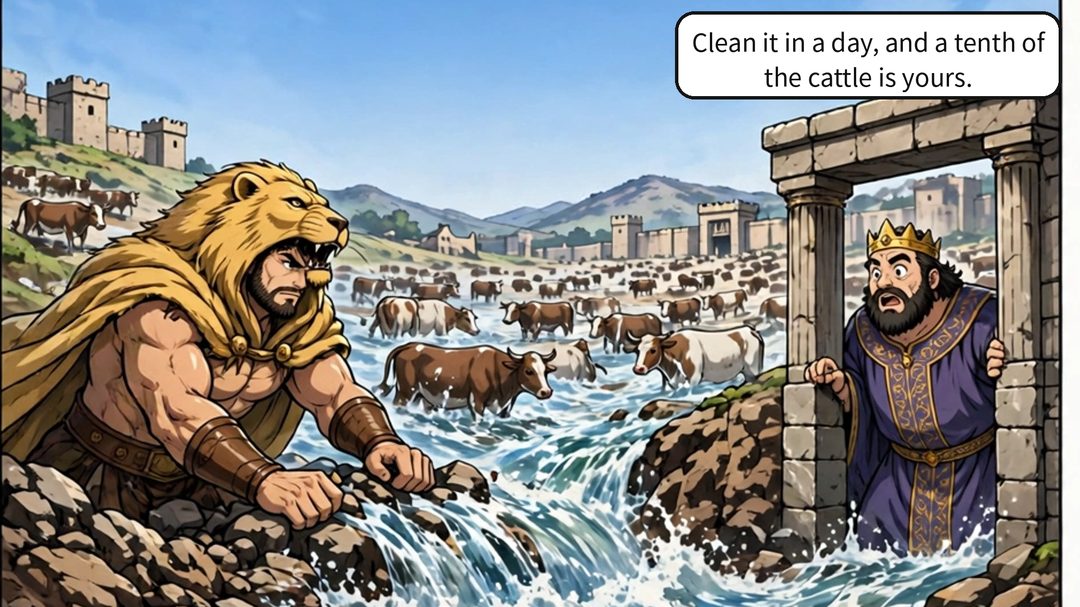
The fifth labor was to clean the stables of Augeas, king of Elis. Thirty years of filth, and he was told to clean it all in a single day. Heracles changed the course of a nearby river, and sent its waters rushing through the stables. Like a flood, the water swept every trace of filth away. But the king refused to pay the promised reward, and so this labor, too, was ruled not to count.
The Man Who Held Up the Sky
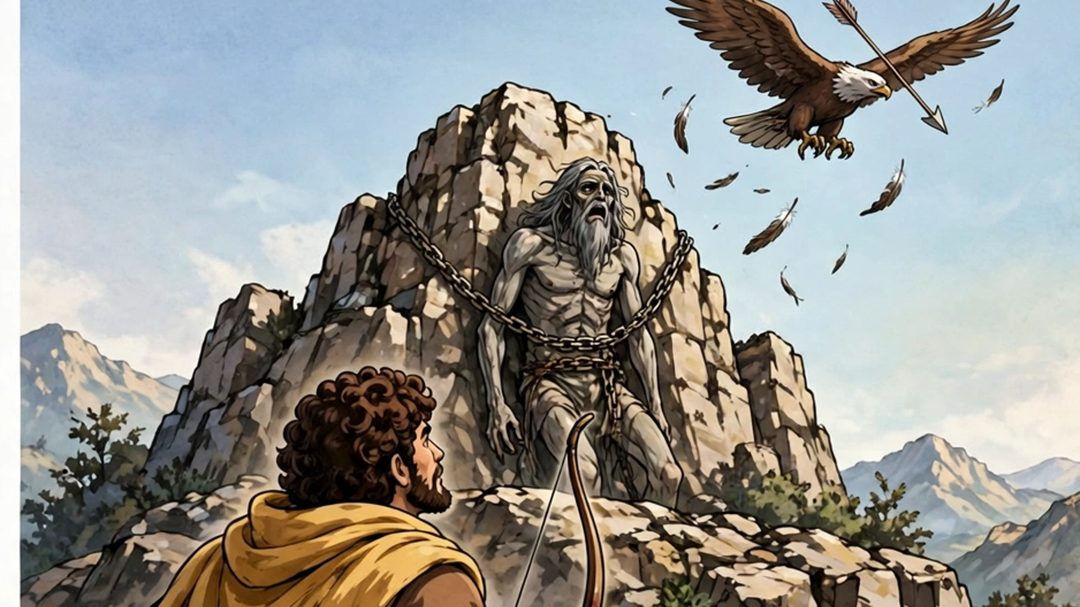
The eleventh labor was to fetch golden apples from the far west of the world. On the way, Heracles freed Prometheus, who was chained to a rock. Prometheus had given fire to mankind, and for that crime an eagle tore at his liver, day after day. Heracles shot that eagle down with a single arrow.
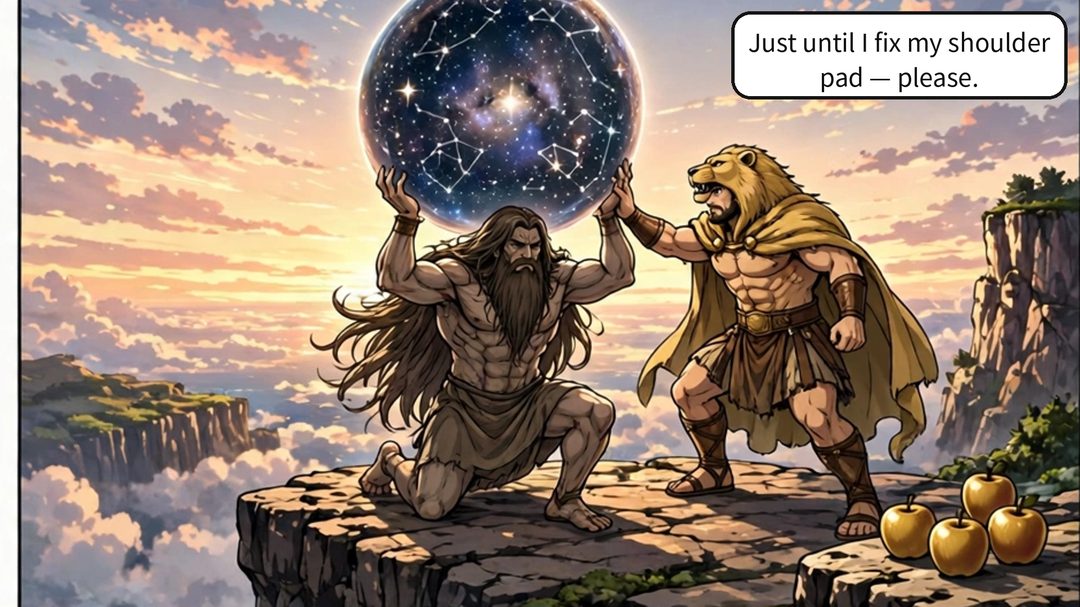
No one could simply walk into the garden of the apples. So Heracles asked Atlas, who held up the sky, to fetch them in his place. In return, Heracles took the sky itself upon his shoulders. Under its weight, his knees began to sink. Atlas came back with the apples, and then he meant to walk away, free. Heracles said: Hold it once more, just while I fix the pad on my shoulder.
The moment Atlas took the sky back, Heracles picked up the apples, and left.
The Hound of the Underworld
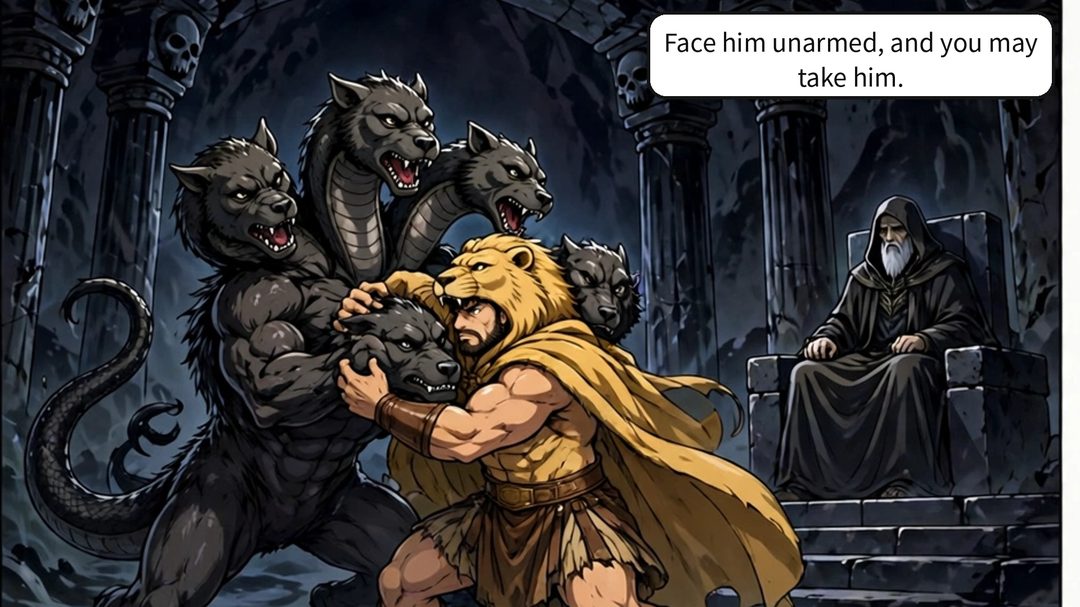
The twelfth and final labor was the most terrifying of all. Bring me Cerberus, the hound of the underworld, and bring him alive. Cerberus was a dog with three heads. His tail was a serpent, and serpent heads rose along his back. Hades, king of the dead, set one condition: Use no weapon. Wrestle him bare-handed, and you may take him. Shielded by the lion's skin, Heracles grappled with Cerberus, mastered him, and carried him up into the world of the living.
With that, all twelve labors were complete.
Deianeira
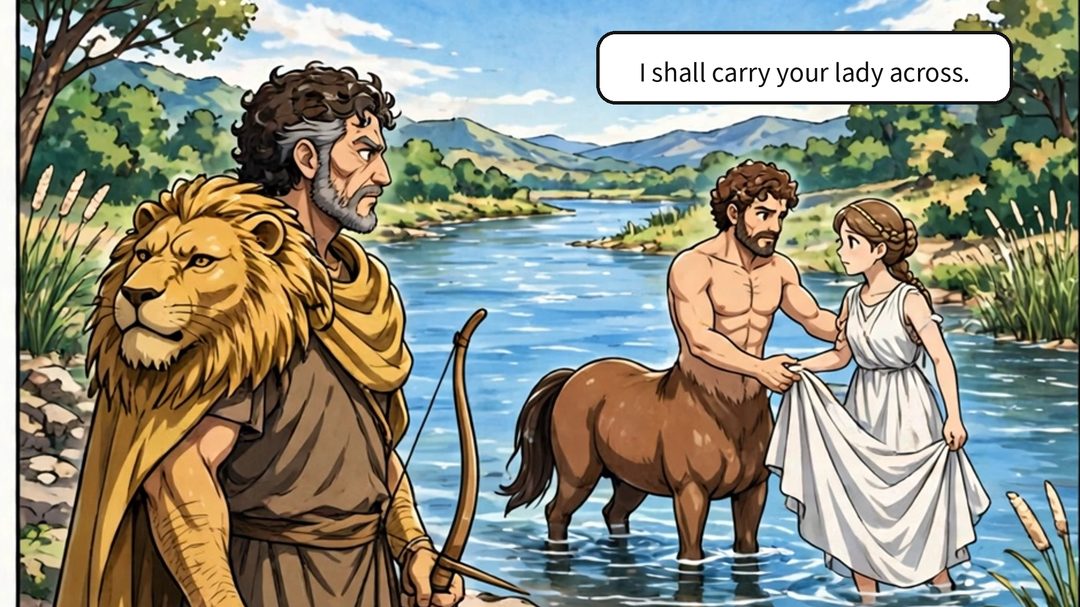
But even with the labors done, the suffering of Heracles was not over. In time, he married a woman named Deianeira. One day, as the two came to a river, the centaur Nessus offered to carry Deianeira across on his back. But the moment he reached the far bank, Nessus tried to carry her off. From across the river, Heracles let fly an arrow, an arrow tipped with the Hydra's poison.
The Poisoned Robe
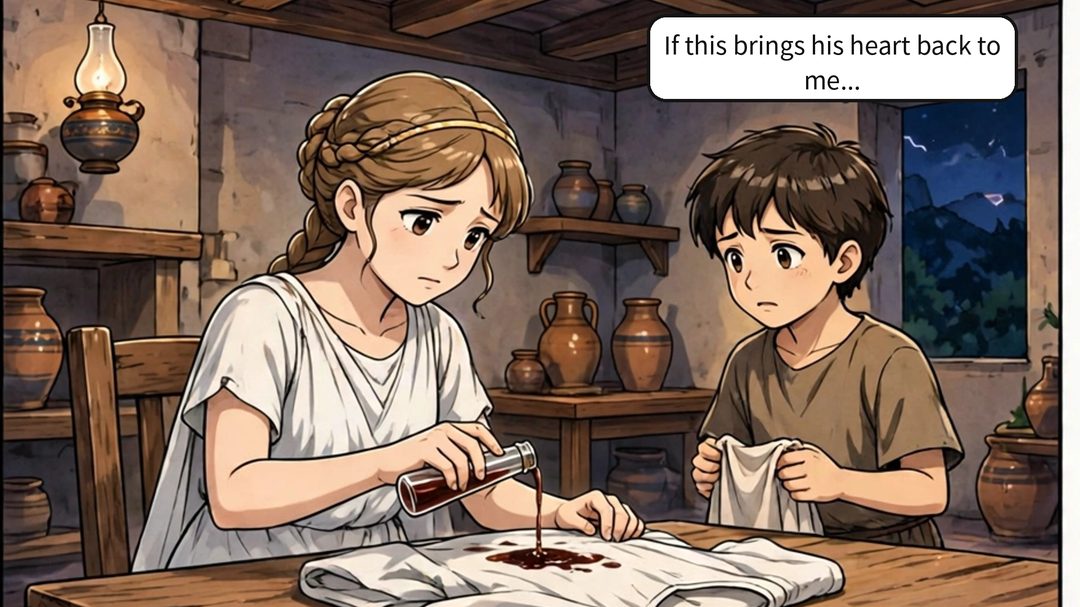
Dying, Nessus whispered a lie to Deianeira. Smear my blood on a robe and give it to him, and his heart will return to you. Later, when Deianeira heard that Heracles' heart had turned to another woman, she sent him the robe smeared with that blood.
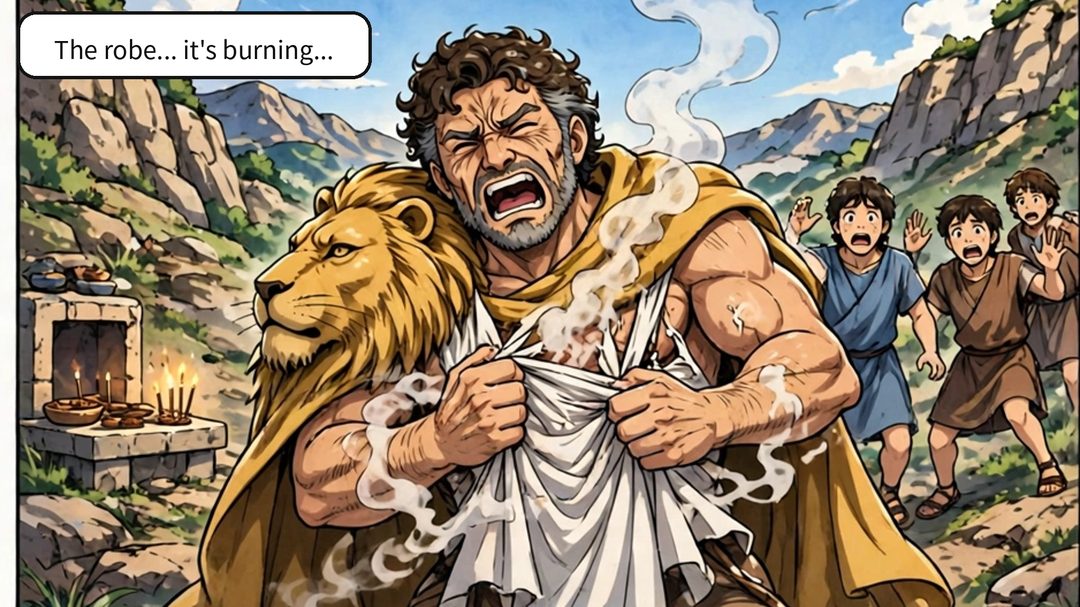
The moment Heracles put on the robe, the Hydra's poison spread through his body. The robe clung to his skin, and when he tore at it, a burning agony ran through him. Killed in the end by the poison of the Hydra he himself had slain. Heracles quietly accepted that irony.
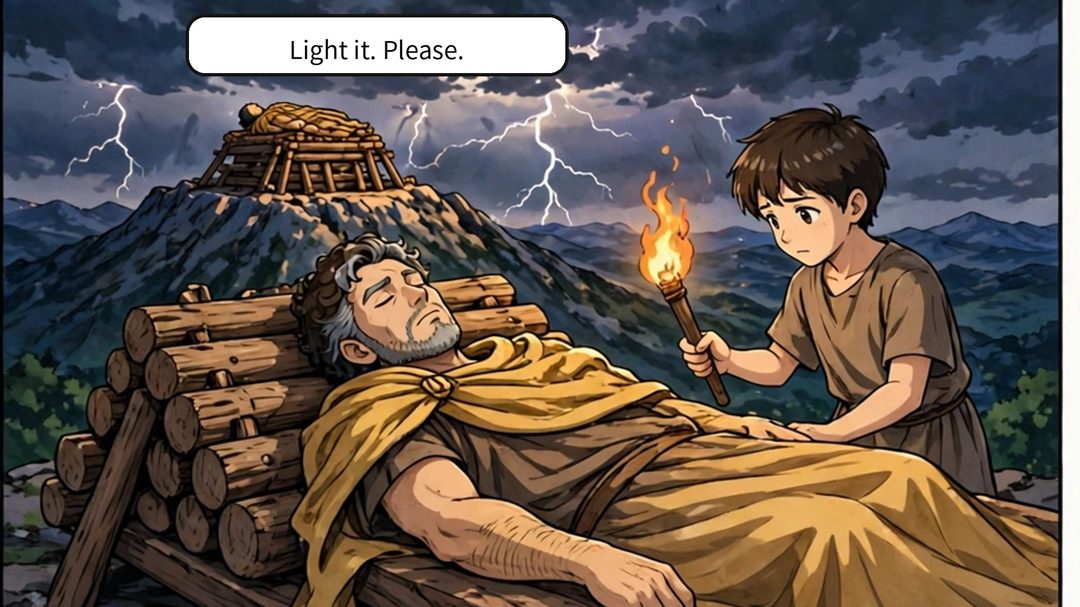
He had a funeral pyre built on the summit of Mount Oeta. And he lay down upon it himself. The young Philoctetes lit the fire, and in thanks, Heracles gave him his bow and his arrows.
The Man Who Became a God
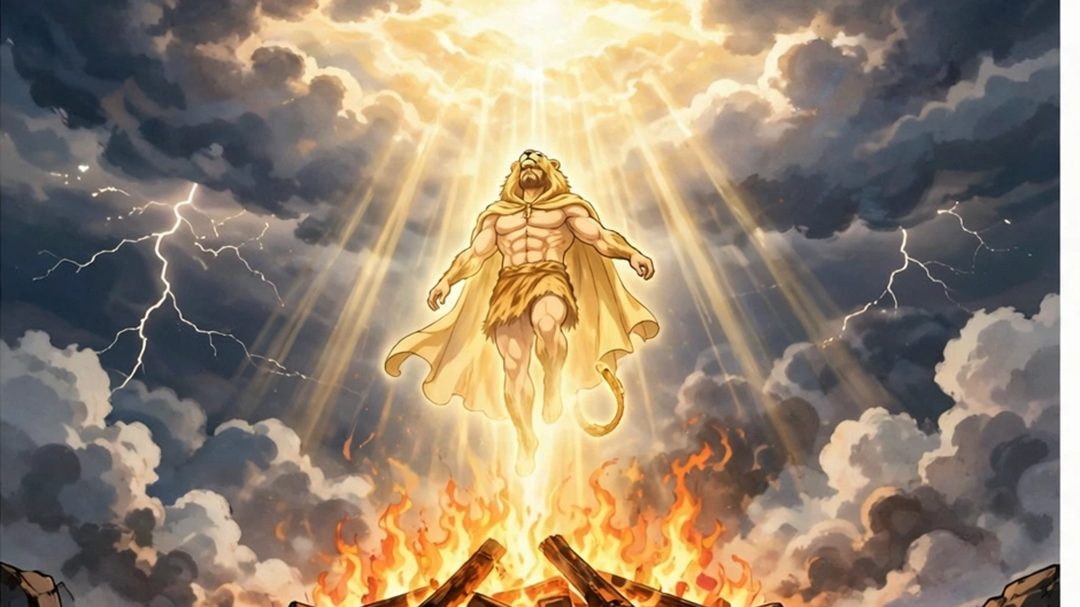
As the flames rose, thunder rolled, and a cloud wrapped itself around Heracles.
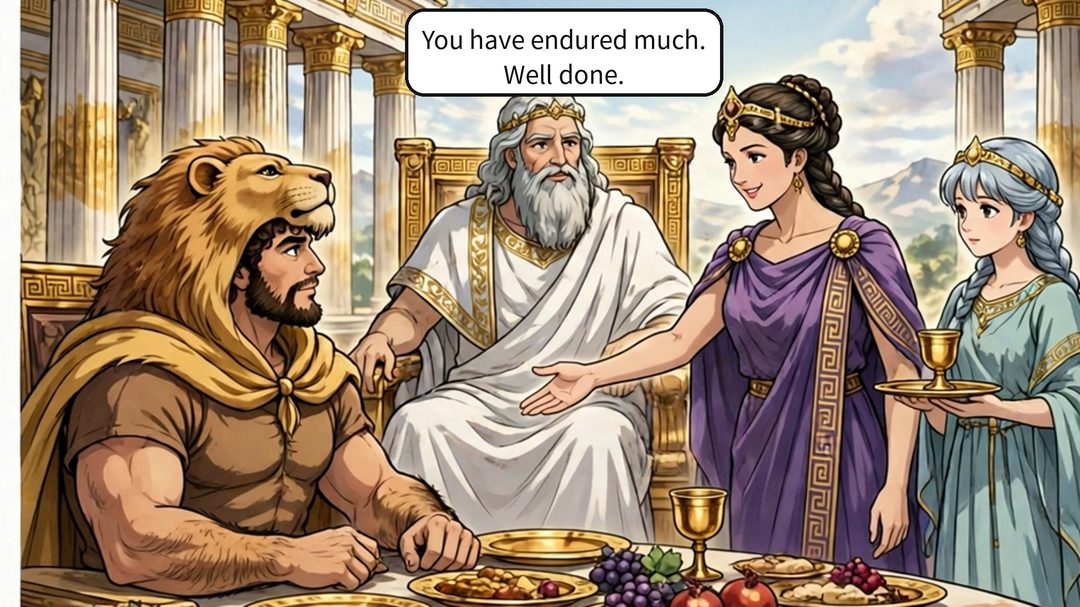
Carried up in that cloud, Heracles was welcomed into the palace of Olympus. He was given an immortal body, and he made his peace with Hera, who had hated him so long. And he took Hebe, the daughter of Hera, as his wife.

His life of suffering did not end in death. The hero had taken his place among the gods. And in the night sky, the constellation Heracles still shines: the figure of a kneeling man.
About the Sources
Before we close, let me tell you where today's story comes from. The main lines of the tale are drawn from the Library of Apollodorus, and from the records of Diodorus. These are ancient stories, and the details differ from telling to telling. Today, we followed the best-known version.
In Summary
To sum up: Heracles had the greatest strength of any hero, and he carried the heaviest guilt, and the heaviest suffering. Behind the tales of monster-slaying stands one man, paying for his sin, again and again. That, perhaps, is why his story has been told for more than two thousand years.
Sources and basis
Sources
- Apollodorus, Library, Book 2 — the main thread, and the standard for the order and counting of the labors.
- Diodorus Siculus, Library of History, Book 4 — consulted as a supporting source.
Variants and notes
- The traditions disagree on the fate of Megara, so this telling does not touch it.
- The speech-bubble dialogue is original writing that keeps the meaning of the ancient scenes.